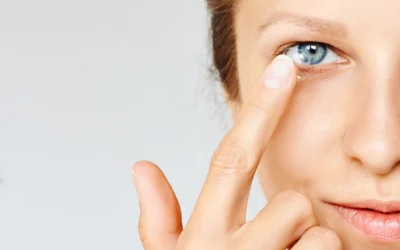
Most contact lens wearers have done it at least once. Maybe you nodded off during a movie or intended to take a quick 15-minute nap that turned into a full night’s sleep. After waking up with your contacts still in, you might wonder whether you’ve harmed your eyes.
Although it may not cause an immediate problem every time, sleeping in contact lenses increases your risk of irritation, infection, and other complications. In this blog, we’ll discuss why eye doctors recommend removing your contacts before bed, what to do if you accidentally sleep in them, and how to keep your eyes healthy.
Is it okay to sleep in contact lenses?
For most people, the answer is no.
Optometrists recommend removing your contact lenses before going to sleep, even if you only plan to rest for a short time. Your eyes need oxygen to stay healthy, and wearing contact lenses while your eyelids remain closed reduces the amount of oxygen that reaches the cornea.
That combination creates an environment in which bacteria can grow more easily, and the eye’s surface becomes more vulnerable to injury.
The risks of sleeping in contact lenses
Regularly sleeping in contact lenses can increase your risk of:
- Eye infections
- Corneal ulcers
- Red, irritated eyes
- Corneal swelling
- Scratches to the front surface of the eye
Accidentally falling asleep with your contacts once doesn’t always lead to complications. However, if it becomes a habit, your risk of developing a serious eye problem increases significantly.
Are some contact lenses approved for overnight wear?
Yes, certain soft contact lenses have received FDA approval for extended wear, meaning some patients can safely wear them overnight for a limited period.
Even so, overnight wear isn’t the right choice for everyone.
Before recommending extended-wear lenses, your eye doctor evaluates several factors, including:
- Your overall eye health
- The quality of your tear film
- Your contact lens prescription
- Your lifestyle and wearing habits
- Any previous eye infections or inflammation
Many patients still achieve the healthiest, most comfortable results by removing their contact lenses every night, regardless of the type they wear.
What about orthokeratology lenses?
Orthokeratology, often called ortho-k, works differently from traditional soft contact lenses. These specially designed gas-permeable lenses are worn while you sleep and gently reshape the front surface of the eye overnight.
When you remove the lenses in the morning, you can often see clearly throughout the day without glasses or contact lenses.
Unlike accidentally sleeping in standard contact lenses, ortho-k treatment is specifically designed for overnight wear and takes place under the close supervision of our optometrists. Patients receive detailed instructions for lens care, cleaning, and follow-up visits to help maintain healthy eyes throughout treatment.
Ortho-k can be an effective option for some adults and children, especially those with myopia (nearsightedness). If you’re interested in overnight vision correction, ask your eye doctor whether ortho-k may be right for you.
What should you do if you accidentally sleep with contacts in?
If you wake up and realize your contacts are still in your eyes, avoid removing them immediately if they feel stuck or uncomfortable. Instead:
- Blink several times to encourage natural lubrication.
- Use lubricating eye drops if your eye doctor has recommended them.
- Wait until the lenses move freely.
- Remove the contacts gently.
- Leave your lenses out for the rest of the day if your eyes feel irritated.
Pay attention to how your eyes feel over the next several hours. If you notice increasing discomfort or changes in your vision, schedule an appointment right away.
Can a short nap with contacts hurt my eyes?
Yes, it can. That’s why you should always take your contacts out before falling asleep.
Many people think sleeping in contact lenses only becomes a concern after a full night’s sleep. However, your corneas receive less oxygen anytime your eyes remain closed, even during a brief afternoon nap.
A 20-minute nap carries less risk than sleeping in your contacts all night, but it still increases the likelihood of dryness and irritation.
Best practices for contact lens wear
Practicing good contact lens hygiene lowers your risk of complications and helps your lenses stay comfortable throughout the day.
Remember to:
- Remove your contacts before going to sleep.
- Replace lenses on schedule.
- Wash and dry your hands before handling your lenses.
- Clean reusable lenses with fresh solution every day.
- Never reuse or “top off” old contact lens solution.
- Replace your contact lens case every few months.
- Keep up with your annual contact lens exam.
Keep your eyes healthy and safe
Contact lenses provide clear, convenient vision, but they require consistent care. Removing your lenses before bed and following your eye doctor’s instructions helps reduce the risk of infection and keeps your eyes feeling comfortable.
At Walter Eye Clinic in Tinley Park, we provide comprehensive contact lens exams and a variety of contact lenses for all vision needs and lifestyles. Whether you’re new to contact lenses or have worn them for years, we’ll help you find lenses that fit comfortably and support your long-term eye health.